Kazi Muri: Make Jhalmuri When You’re Ready to Serve
The first bowl of jhalmuri can have a lively crunch, while the last portion from the same mixing bowl feels softer. The difference often comes down to timing. Once muri meets chopped vegetables, oil, lemon juice or other moist ingredients, the snack starts changing. Preparing the additions first and mixing only what you’re about to serve gives you more control over each bowl.
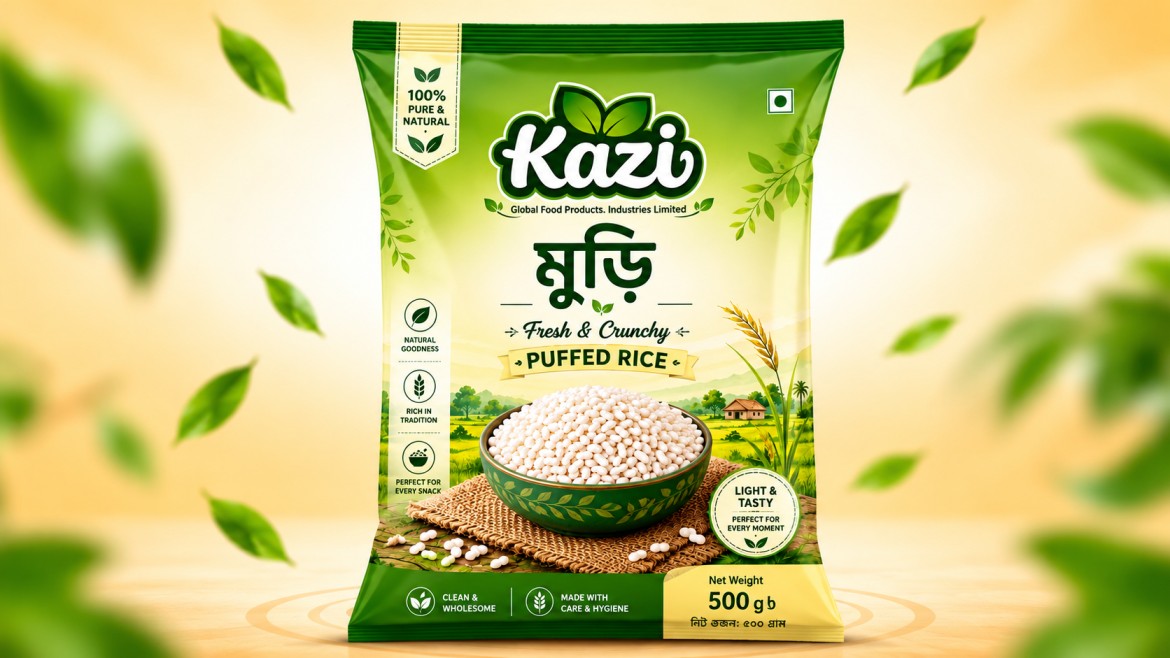
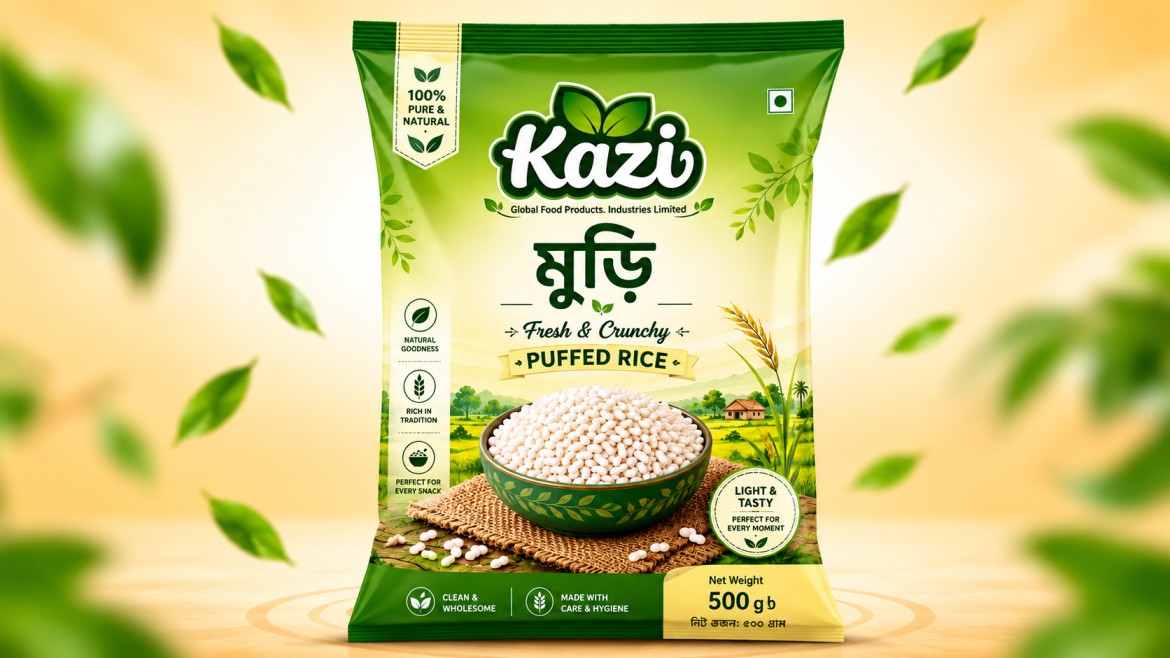
Kazi Muri is a 500 g puffed rice product from Kazi Global Food Products Industries Limited. The official listing presents it for eating on its own or combining with other ingredients for jhalmuri and traditional snack mixes. The supplied promotional image shows a green pouch marked 500 g. Kazi Global Foods
Whether you’re putting together an afternoon snack or serving several guests, start with the serving plan. Decide how much muri to mix, which additions will go in and what can stay separate until the last moment.
Why Jhalmuri Is Best Planned in Stages
Muri provides the light texture at the centre of the snack. Onion, cucumber, chilli and other additions bring their own flavour and moisture. Dry ingredients such as chanachur or roasted components contribute another texture. When you combine everything, those differences become part of the finished bowl.
For a single serving, you can prepare the ingredients and mix them together just before eating. For guests arriving at different times, separate preparation from assembly. Have the additions ready according to their own handling requirements, then combine a smaller batch when people are ready.
That approach also makes seasoning easier. You can taste one trial bowl before adding the same mixture to the rest of the muri. If someone prefers less chilli or no particular garnish, you still have the option to make their portion differently.
Organise Ingredients Before Opening the Pack
Choose a recipe or a familiar household combination. Gather the ingredients it calls for and decide which are mixed through and which are optional.
Start With a Small Bowl of Jhalmuri
For a first preparation, use a manageable amount of muri and record the quantity. Add the ingredients in the sequence given by the recipe. Use a bowl large enough to mix without crushing the puffed rice or spilling the lighter pieces over the side.
Taste the complete mixture after the seasonings are distributed. A spoonful from the top may miss ingredients sitting at the bottom, so mix gently and thoroughly before deciding whether to add anything else.
If you want to adjust the result, change one thing in the next bowl. For example, keep the muri and dry seasoning amounts the same while adjusting the fresh additions. If you alter the chilli, salt, oil and vegetables together, you may make a bowl you like, but you won’t know which change helped.
Write down the combination once it suits you. A short note makes it easier to recreate than “a little of everything.”
Balance Chilli and Salt Across the Whole Mix
Jhalmuri may include several sources of heat and salt. Fresh chilli, chilli powder, chanachur and prepared seasonings can overlap. Read the labels on packaged additions and consider the mixture as a whole.
Begin with the measured recipe quantity. Taste before adding more. If you’re serving guests, a moderate shared mixture with optional accompaniments may be easier to manage than a large bowl that everyone finds too hot.
The ratio of additions to muri matters as well. A seasoning amount that suits one bowl of puffed rice can taste stronger if the bowl contains less muri and more fresh ingredients. When recording your preferred preparation, include the amount of each main component. That gives you a clearer reference for scaling up.
Use Mustard Oil Only Where the Recipe Calls for It
Mustard oil appears in many jhalmuri preparations, where its distinctive flavour becomes part of the snack. Follow a suitable recipe and use a product labelled for the intended culinary use in your market.
Measure the oil before adding it. A direct pour from a large bottle can quickly exceed the amount you intended, especially in a small bowl. Mix it through so the seasoning reaches the puffed rice evenly.
If you’re new to a particular oil, prepare a small bowl first rather than seasoning all 500 g of muri. Assess that finished portion with the other ingredients included. It gives you a chance to decide how noticeable you want the mustard flavour to be before serving guests.
Offer Plain Muri as an Option
A bowl of plain muri can be useful at tea time, particularly when people have different seasoning preferences. Set out the portion you plan to serve and keep the remaining product closed according to the pack directions.
You can offer suitable accompaniments separately so people choose their own combination. A shared snack table might include plain muri, one prepared jhalmuri mixture and optional additions. That arrangement gives guests choices without requiring several fully mixed batches.
Use separate utensils for the plain muri and the prepared mixture. It helps keep moist ingredients out of the dry portion and makes the serving area easier to manage. It also helps you see which option people actually prefer when planning the next gathering.
How Much of a 500 g Pack Should You Use?
The 500 g on the pictured pouch is the product’s net weight. It does not establish a fixed number of snack bowls. Portions depend on the bowl size, additions and whether muri is the main snack or one of several foods served.
Use a trial serving to estimate. Suppose your own preparation uses 40 g of dry muri per bowl. Ten equivalent bowls would require 400 g, leaving 100 g from a 500 g pack before any other uses. These figures illustrate purchasing arithmetic; 40 g is not a prescribed portion or a verified yield for Kazi Muri.
For a gathering, measure the dry muri for one finished bowl and note how full it looks after the additions. Use that bowl as your reference. Counting the dry weight is more reliable than assuming every household bowl holds the same amount.
Serve Guests in Batches
If guests arrive over an afternoon, plan several smaller mixing rounds. Keep reserve muri dry and closed, and handle each fresh or prepared addition according to its own requirements.
Before the first serving, make one bowl and assess the seasoning. Once the balance is right, record the quantities or use clearly measured portions for each round. Avoid changing the mixture casually as the afternoon progresses if you want the later bowls to match the first.
Assign someone to mix and someone to serve if the gathering is busy. This reduces the chance that all the reserve ingredients are combined too early. Afterward, note how much dry muri was used and how much remained. That information is useful for the next event.
Understand the Product Before Comparing It
The official Kazi Muri listing identifies the product as puffed rice in a 500 g pack. It does not establish a product-specific rice variety, processing temperature, nutrient analysis or environmental certification in the information reviewed for this article. Kazi Global Foods
Check the current ingredient declaration and any specifications that matter to your purchase. The green design and field illustration introduce the brand, but they do not independently verify the product’s composition or production method.
Likewise, descriptions such as “natural,” “clean” or “wholesome” should match approved information. If you need a particular assurance, ask a specific question. Clear documentation is more useful than interpreting a badge or illustration.
Read the Pack When It Arrives
Confirm the exact product name and net weight. Check the seal, batch identification, date markings and storage directions. Inspect the pouch for tears or signs that it has been damaged.
Puffed rice is light and occupies space, so consider how the package has been handled. A pouch pressed under heavier groceries may arrive differently from one transported with room around it. If you’re buying for an event, order early enough to inspect the delivery.
For online purchases, check the selected size in the order details rather than relying only on the image. Keep the receipt and pack information if you need to ask about a particular delivery.
Keep the Reserve Dry Between Servings
Follow the storage directions printed on the actual pack. Close it properly after use and protect it from moisture and contamination.
Use a clean, dry scoop. Avoid returning muri from a serving bowl to the main pack, particularly if it may have contacted moist ingredients or used utensils.
If transferring the contents to another suitable food container, retain the original product name, batch and dates. Label it clearly and close it as directed. The handling of dry packaged muri is different from that of a finished jhalmuri mixture, which contains other ingredients.
For a shared kitchen, make the storage arrangement easy to follow. A clearly identified reserve container and a separate mixing bowl reduce unnecessary handling.
Buying for Shops, Snack Sellers and Catering Businesses
Retailers can start with sales by pack size. A snack seller can calculate dry muri requirements from the amount used per serving and the expected number of orders. A caterer may need a separate estimate for each event.
Before arranging recurring supply, evaluate the exact pack being quoted. Check packaging condition on arrival and assess the product in the snack preparation you actually serve. Record the batch details and your preparation method.
When comparing a wholesale food supplier in Bangladesh, ask for pouch weight, units per carton, minimum order quantity, delivered price and expected timing. Clarify how crushed or torn packs, shortages and incorrect items are handled. Compare the complete delivered order rather than the pouch price alone.
Prepare a Specific Wholesale Enquiry
Identify the item as Kazi Muri 500 g and state whether you need retail pouches, cartons or another available format. Include the quantity, delivery location and expected ordering frequency.
Kazi Global Food’s wholesale enquiry form accepts product, quantity, packaging and destination requirements. For international enquiries, name the destination and ask which product specifications and documents are available for the proposed shipment. kaziglobalfood.com
Ask for written confirmation of the exact item and agreed terms before placing a recurring order. A clear first enquiry gives the supplier a better basis for an accurate quotation.
The Company Behind Kazi Muri
Kazi Global Food Products Industries Limited identifies Kazi Muri as part of its packaged food range. The company describes itself as a Bangladesh-based food product company with activities covering food processing, manufacturing, packaging and distribution. Kazi Global Foods
For buyers comparing food company brands, that information helps identify the business behind the pouch. The current label and written quotation provide the details for an individual purchase.
The slogan “Your Trusted Food Products Brand” expresses the company’s brand promise. Customers can assess it through clear information, responsive service and their own purchasing experience.
Frequently Asked Questions
Is Kazi Muri puffed rice?
Yes. The official product listing identifies Kazi Muri as puffed rice.
What size appears in the supplied image?
The artwork shows a pouch marked 500 g. Confirm the size in the current seller listing before ordering.
Can I use it for jhalmuri?
The official listing presents jhalmuri and other traditional snack mixes as uses. Choose a suitable recipe and mix the portion you intend to serve. Kazi Global Foods
Can I mix jhalmuri before guests arrive?
Prepare the components as appropriate to each ingredient, then combine smaller batches close to serving if you want to maintain the intended texture.
Where can I check current prices?
Visit the official Kazi Muri page or contact the seller. Use the wholesale form for larger or recurring orders.
Before your next gathering, make one trial bowl. Note the dry muri weight, the additions and how it tastes when served. Those details will help you prepare the next round and buy the right amount for the occasion.
Photo Gallery