Kazi Premium Sugar: Measure Sweetness for Everyday Drinks and Celebration Desserts
A spoonful of sugar can be adjusted in an individual cup of tea. A cake mixture requires a different approach: its sugar measurement belongs to a complete recipe. In payesh or semai, milk, dried fruit and other ingredients also influence the sweetness of the finished bowl.
Understanding those differences makes sugar easier to use consistently. It also helps households and businesses purchase the quantity they actually need.
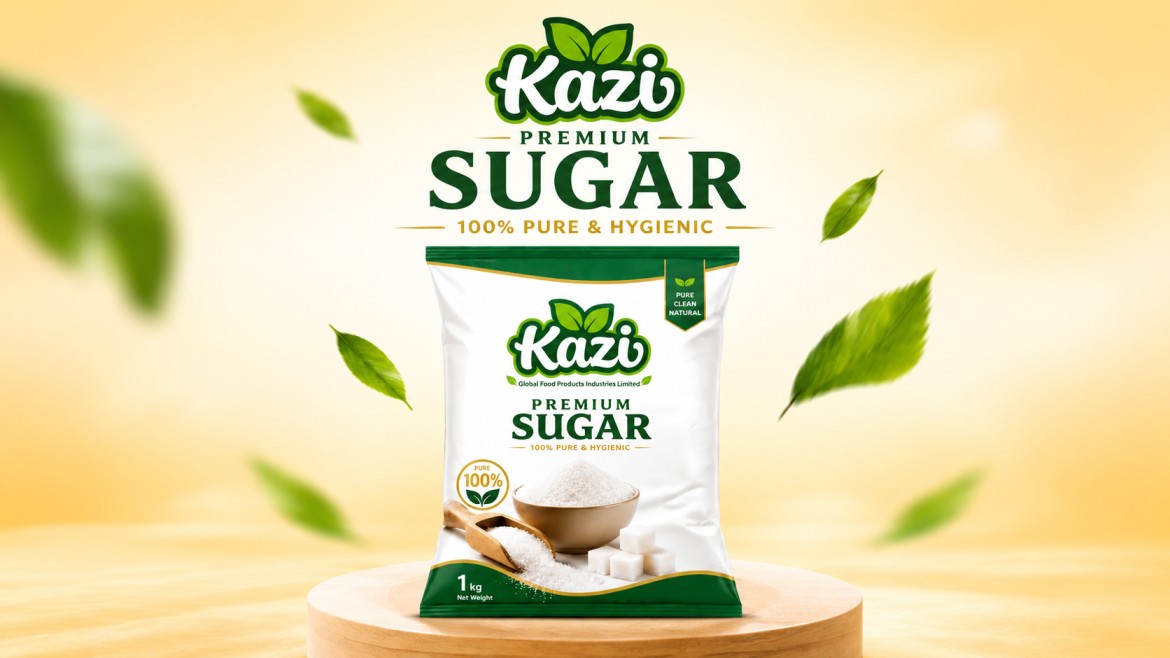
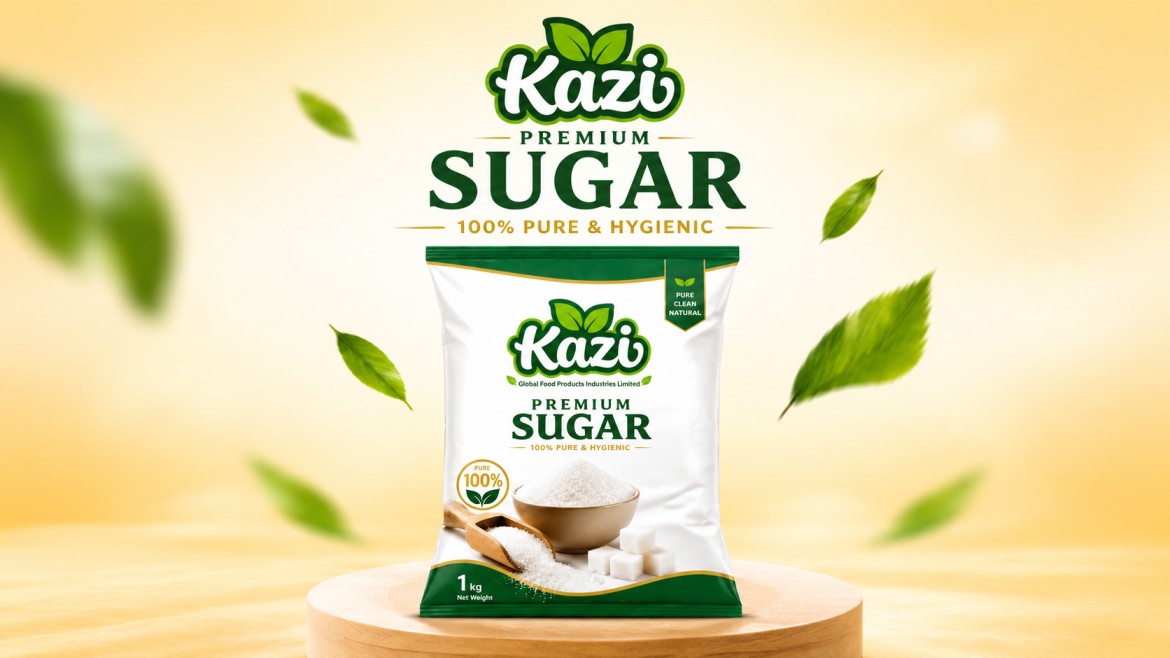
Kazi Premium Sugar is a refined sugar product from Kazi Global Food Products Industries Limited. The official listing identifies tea, coffee, cakes, desserts and traditional sweets among its uses. The supplied promotional image shows a green-and-white pouch marked 1 kg. Kazi Global Foods
This guide explains how to approach measuring, recipe selection, storage and purchasing without relying on a single rule for every preparation.
Begin With the Job Sugar Needs to Do
Before measuring sugar, identify the preparation.
For a drink, the main decision may be the individual’s preferred sweetness. In baking, sugar can also influence texture, browning and how the mixture behaves. In a syrup, the relationship between sugar, water and the finishing stage matters.
Choose a recipe written for the dish you intend to make. Keep its quantities and preparation stages together.
If a recipe asks for a particular sugar type, check whether your product matches it. Refined sugar should not automatically be substituted for every form of sugar named in a recipe.
Clear decisions before cooking reduce last-minute adjustments.
What the Pictured 1 kg Pack Tells You
The artwork identifies the product as Kazi Premium Sugar and displays a net weight of 1 kg.
That is the pictured pack weight, not a verified number of cups, recipes or servings.
Read the actual retail label for the ingredient declaration, responsible business details, batch identification, date markings and storage directions. Confirm current pack sizes with the seller before ordering.
The illustrations of granules, a scoop and sugar cubes are part of the design. They do not establish that several sugar formats are included in the pouch.
For a product specification beyond the label, request clear information directly from the company.
Tea and Coffee: Measure for the Cup You Use
A small cup of tea and a large mug do not contain the same amount of drink. A familiar spoonful may therefore produce different results.
Use a consistent cup and a level measuring spoon when establishing your preference. Stir before deciding whether another addition is needed.
For guests, offering sugar separately can make individual preferences easier to accommodate. This is particularly useful when some people prefer unsweetened drinks.
A shared office station should have a clean, dry spoon and an identifiable container. Keep the current product information available.
If supplies are purchased regularly, record actual use across a representative week rather than estimating demand from staff numbers alone.
Milk Tea: Consider the Complete Preparation
Milk tea can include different proportions of brewed tea, milk and water. Some methods also use already-sweetened ingredients.
Read the complete recipe before adding sugar. Account for every source of sweetness rather than treating the sugar quantity in isolation.
If preparing several cups, use consistent serving sizes. A batch that fills four small cups may not provide four large mugs at the same strength and sweetness.
Keep a note of the preparation your household enjoys. Record the quantities and final servings so someone else can repeat it.
For a café, those details also support menu costing and stock planning.
Payesh: Follow the Ingredient Sequence
Payesh combines rice, milk, sweetener and optional additions. The sequence matters because the preparation changes as it cooks.
Use a recipe that identifies the rice type and gives measured quantities. Follow its guidance on when sugar is added.
The degree of milk reduction influences the finished consistency and how the sweetness is experienced. A wide pan and a narrow pot may produce different results within the same period.
Assess a trial portion in the form you intend to serve it, after any prescribed resting or cooling stage.
Record the rice weight, milk quantity, sugar and portions produced. These details provide a stronger basis for repeating the dessert than colour or memory alone.
Semai: Count All Sweet Ingredients
A semai preparation may use ordinary milk, a sweetened milk product, raisins or other additions. Each can affect the final balance.
Measure sugar separately and follow a recipe appropriate to the vermicelli being used. A method for fried laccha semai may differ from one developed for another format.
Do not assume that reducing or increasing sugar leaves every other part of the dessert unchanged. Test an adjustment in a manageable batch first.
Taste the finished preparation with its intended toppings. A plain spoonful and a fully garnished bowl may create different impressions.
For gatherings, record both the ingredient quantities and the serving size before calculating how much to buy.
Cakes: Use the Weight Specified by the Recipe
When a cake recipe gives sugar in grams, use a suitable kitchen scale.
An unmarked cup or heaped spoon introduces uncertainty, particularly when several people prepare the same recipe.
Follow the mixing method as well. Some cakes begin by beating butter and sugar, while others combine ingredients differently.
The same quantity added at another stage may not produce the intended mixture. Read the full method before starting.
If you want a lower-sugar version, choose a tested recipe developed for that result or conduct a small trial. Arbitrary reductions can affect more than sweetness.
Keep the tin size, equipment and ingredient weights consistent during comparisons.
Biscuits and Other Baked Preparations
Biscuit recipes often depend on a balance between flour, fat, sugar and liquid.
Check the sugar form required. A recipe specifying icing sugar, caster sugar or brown sugar may behave differently if another product is substituted.
The Kazi product listing describes refined sugar, but a product-specific crystal-size specification has not been verified here.
If that detail matters for commercial baking, request it from the supplier and evaluate the product within the intended recipe.
Record the finished yield, portion size and preparation method. A documented batch gives you a useful reference when reviewing ingredient use or comparing future deliveries.
Syrups: Keep Ratio and Method Together
A syrup recipe should identify the sugar and water quantities and explain the intended finishing point.
Measure before heating. Keep the recipe’s units consistent rather than mixing a weight measurement from one source with a cup measurement from another.
Follow the method’s cues. Depending on the preparation, those may include a temperature or a description of consistency.
Do not assume that a syrup suitable for one sweet is appropriate for another. Choose a recipe developed for the specific result.
For businesses producing sweets, document the equipment, batch size and final yield. These records help distinguish recipe variation from portioning or production losses.
Make Adjustments You Can Understand
When a preparation differs from what you expected, review the actual measurements before changing the next batch.
Was an ingredient already sweetened? Did the milk reduce further? Were the portions smaller? Did the recipe specify a different sugar format?
Change one element at a time where practical. Keep the other ingredients and equipment steady.
This article provides a suggested evaluation approach. It does not claim an independent cooking or baking trial of Kazi Premium Sugar.
Original observations should come from preparing the actual product under documented conditions. Those records help households repeat favourites and businesses standardise production.
How Long Could a 1 kg Pack Last?
A kilogram equals 1,000 g. The useful planning question is how much your recipes and drinks use during a representative period.
For example, if recorded household use is 200 g per week, a 1 kg pack would cover approximately five weeks at that rate.
This is stock arithmetic, not a recommended consumption quantity.
Add special-event recipes separately. A cake or dessert prepared for guests may use a substantial part of a pack without representing ordinary weekly demand.
Businesses should calculate from recipe weights, production schedules and actual sales. That produces a more useful order estimate than an assumed number of servings per pouch.
Compare Prices on the Same Basis
Check the net weight before comparing two packs.
Divide the total price by the weight in kilograms for a basic price-per-kilogram comparison. Include delivery or collection costs where relevant.
Then check whether the products meet the same specification and intended use. Similar packaging does not establish identical contents or commercial terms.
A larger purchase may reduce unit cost, but it should fit storage capacity and expected turnover.
For online orders, confirm the selected size in the order details. A seller may use one promotional image across several pack options.
Read Packaging Claims Carefully
The supplied image includes purity, hygiene and quality wording. Those statements should match the approved label and supporting documentation.
A badge on promotional artwork does not identify a testing method or explain a guarantee.
If a claim affects your purchase, ask for product-specific clarification. Likewise, do not describe refined sugar as organic, unrefined or additive-free unless verified information supports that description.
The word “natural” in artwork should not be interpreted as a health claim.
For purchasing, focus on information you can check: ingredient declaration, weight, dates, packaging condition and the responsible business.
Store Sugar According to the Label
Follow the directions on the current retail pack.
Use a clean, dry utensil and protect the contents from moisture. Measuring ingredients away from steam and splashes makes this easier.
If transferring sugar to another suitable food container, close it appropriately and retain the original identification, batch and date information.
Label the container clearly, especially in a kitchen where salt and other similar-looking ingredients are stored nearby.
For commercial stock, keep deliveries identifiable and rotate them appropriately. Avoid routinely topping up a working container without retaining the information needed to trace its contents.
Buying for Cafés, Bakeries and Retail Shops
A café should estimate demand from drinks and menu items. A bakery should use recipe weights and production schedules. A retailer should track sales by pack size.
Before arranging repeat supply, confirm the exact product and specification being quoted.
A bakery can evaluate an initial purchase in a familiar recipe and record the result. A retailer can inspect packaging condition and assess stock turnover.
When comparing a wholesale food supplier in Bangladesh, ask about packs per carton, minimum order quantity, delivered price and lead time.
Clarify how damaged pouches, shortages and incorrect items are handled. Compare the complete order arrangement rather than the pouch price alone.
Prepare a Specific Wholesale Enquiry
Identify the product as Kazi Premium Sugar and state the preferred pack size.
Include the quantity, delivery location, intended use and expected ordering frequency. Request any specification relevant to your business.
Kazi Global Food’s wholesale enquiry form accepts product, quantity, packaging and delivery requirements. kaziglobalfood.com
For international enquiries, name the destination and ask what documentation is available for the proposed shipment.
Export capability should be confirmed for the order. Unsupported company rankings should not replace checks on product specifications or commercial terms.
Clear written requirements give the supplier a stronger basis for an accurate quotation.
The Company Behind Kazi Premium Sugar
Kazi Global Food Products Industries Limited is identified on the official listing as the company behind Kazi Premium Sugar. Kazi Global Foods
The company describes its activities as covering food processing, manufacturing, packaging and distribution, with a portfolio spanning everyday food and beverage products. kaziglobalfood.com
For customers comparing food company brands, that provides business context. The current product label remains the reference for an individual purchase.
The slogan “Your Trusted Food Products Brand” expresses a promise customers can assess through accurate information, responsive service and their own experience.
Photo Gallery